Service
Strength Training Coaching in North Dallas
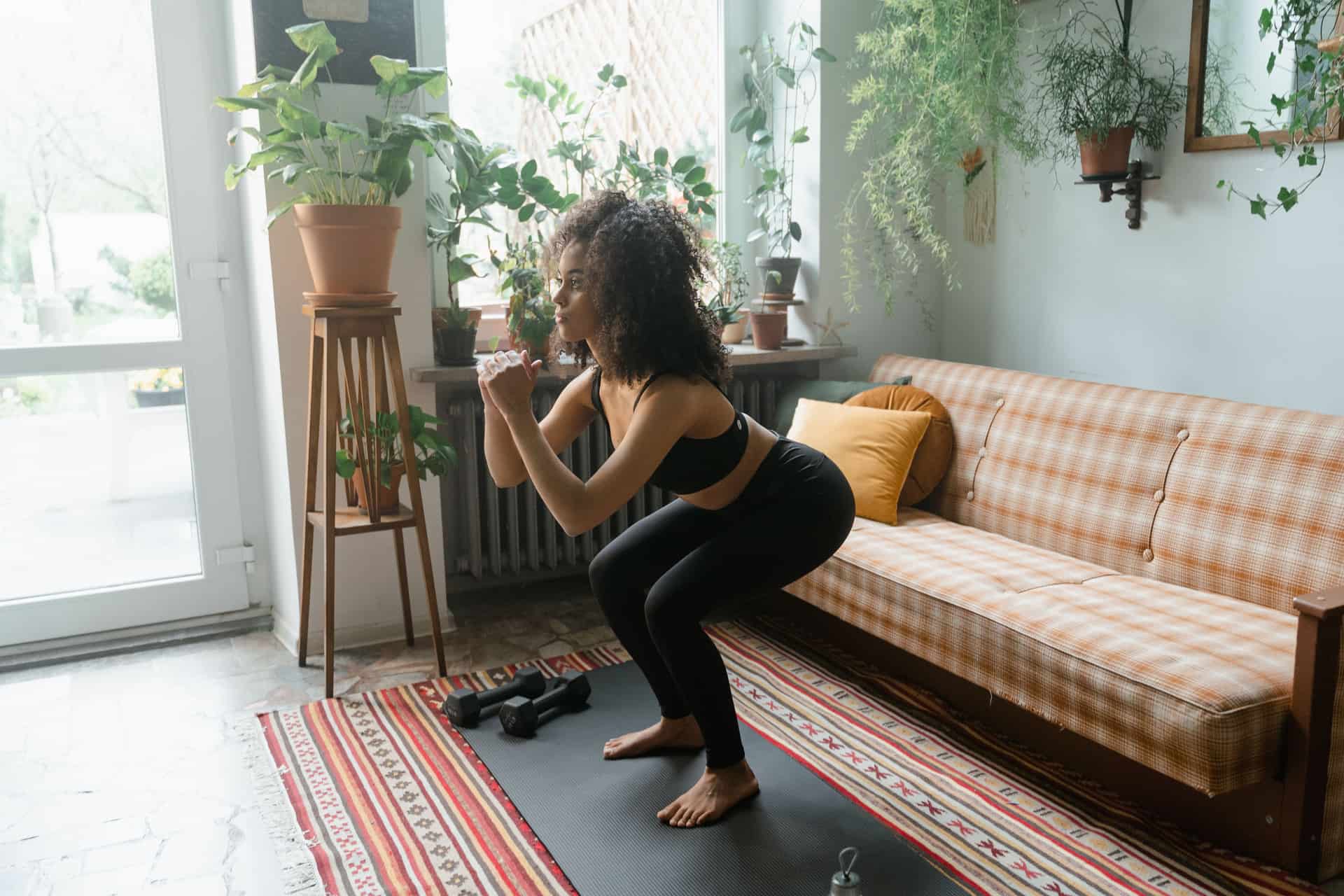
Get strong in a way you can feel — carrying groceries, playing with kids, climbing stairs without thinking about it. I teach the fundamentals properly, then progress you week by week. No barbell required.
Is this right for you?
- You've heard you should lift weights but have no idea where to start
- You've been doing cardio for years and your body hasn't changed
- You're in your 30s, 40s, or 50s and want to stay strong and independent
- You want to lose fat without losing muscle
- You've had an injury and want to rebuild strength carefully
- You want to lift heavier but need someone to watch your form
What strength training with me looks like
Strength training is teaching your muscles and nervous system to produce more force, then gradually asking for a little more. That's it. It doesn't require a gym, a barbell, or an athletic background. It requires good movement, a plan that adds a little each week, and someone paying attention.
Every program I write is built on five movement patterns:
| Pattern | Everyday version | Beginner exercise | Where it goes |
|---|---|---|---|
| Squat | Sitting down and standing up | Squat to a chair | Goblet squat → heavy kettlebell squat |
| Hinge | Picking something up off the floor | Hip hinge with a dowel | Kettlebell deadlift → single-leg deadlift |
| Push | Pushing a door, getting off the floor | Incline push-up | Push-up → dumbbell press |
| Pull | Opening a heavy door, carrying bags | Band row | Dumbbell row → chin-up progressions |
| Carry | Groceries, kids, suitcases | Farmer's carry | Suitcase carry → loaded carries |
Each session includes most of these, in a mix that changes through the week. That's all you need to get strong — everything else (core work, single-leg work, mobility) supports these five.
Progressive overload, explained simply
The phrase you'll hear is progressive overload — gradually doing a bit more over time. That can mean more weight, more reps, a harder version of the exercise, slower tempo, or less rest. I track every session so we always know what "a bit more" means for you. Most beginners add weight to their main lifts almost every week for the first two or three months, because the body adapts quickly to a new demand. After that, progress is slower and more deliberate — which is where a coach earns their keep.
Equipment: what I bring and what you might buy later
For in-home sessions I bring adjustable dumbbells, kettlebells in several sizes, resistance bands, a mat, sliders, and a suspension trainer. That's enough to take most people from their first session to genuinely strong.
If you decide to invest in home equipment for the days between sessions, my usual recommendation, in order, is: a set of resistance bands, one or two kettlebells, and adjustable dumbbells. I'll tell you what sizes when we get there — buying too heavy is the most common mistake.
For online clients, I program around whatever you have, including nothing. Bodyweight strength training is real strength training if it's progressed properly — see strength training for beginners at home.
Who strength training is for
Beginners. If you've never lifted, you are the person strength training helps most. Everything is new, so everything improves. Your first sessions are about learning to move well with light loads; we add weight only when the form is there. More on my beginner fitness coaching.
Women who've been told to "tone." Toning is strength training. Muscle is what makes a body look "toned," and it takes far more work than most people fear to add a lot of it. Lifting weights that feel genuinely heavy is the fastest route to the result most women are actually describing. See training for women.
Adults in their 40s, 50s, and beyond. Muscle and bone density decline with age unless you ask them not to. The National Institute on Aging lists strength exercises among the types of exercise that improve health and physical ability, and federal guidelines call for muscle-strengthening activity at least two days a week (CDC). Two well-coached sessions a week is the single most protective habit I know.
People with a weight-loss goal. Strength training preserves muscle while you lose fat, which is the difference between looking "smaller" and looking strong and healthy. It's the foundation of my weight-loss coaching.
People coming back from injury. Once you're cleared by your physician or physical therapist, I build back strength carefully, coordinating with what your PT has prescribed. I'm not a medical provider; I'm the person who helps you keep going after discharge.
Safety and form
The most common strength-training injuries come from doing too much too soon, usually alone. My job is to make sure that doesn't happen to you. Every rep in a session is watched. We start lighter than you think you need, we own the movement before we load it, and we stop a set when form breaks, not when you're exhausted. Soreness is normal in the first two weeks; pain is not, and you'll always be asked the difference.
What results look like
- Weeks 1–4: movements feel coordinated instead of awkward. Weights go up quickly.
- Weeks 4–12: you feel it in daily life — stairs, lifting kids, carrying everything in one trip. Posture improves. Sleep often improves.
- Months 3–6: visible changes in muscle tone if nutrition supports it. Your "heavy" from month one is your warm-up.
- Beyond: you train because you like being strong. That's the real goal.
A beginner's first eight weeks of strength training
Here's the arc most of my clients follow. The exercises change based on your assessment, but the progression logic is the same.
| Weeks | Focus | Typical main lifts | What changes |
|---|---|---|---|
| 1–2 | Learn the five patterns with light loads | Squat to box, kettlebell deadlift, incline push-up, band row, farmer's carry | Movements feel coordinated; mild soreness fades |
| 3–4 | Add a little each session | Goblet squat, deadlift with a heavier bell, push-up on a lower surface, dumbbell row | Weights go up nearly every session; stairs feel easier |
| 5–6 | Introduce single-leg and tempo work | Split squat, single-leg deadlift (assisted), slow-tempo push-ups, suitcase carry | Balance improves; posture changes |
| 7–8 | Consolidate and test | Heavier goblet squat, kettlebell deadlift, full push-up progressions, loaded carries | You're doing real strength training; your week-one "heavy" is a warm-up |
After eight weeks the program moves into longer blocks with clearer goals — a heavier deadlift, a first full push-up, a longer carry — and progress becomes more deliberate.
Strength training and your body, plainly
Muscle. Strength training makes muscle fibers thicker and, more importantly for beginners, teaches your nervous system to recruit more of the muscle you already have. That's why beginners get much stronger in the first two months before they look different — the wiring improves first.
Bone. Loading the skeleton signals bone to stay dense. This matters for everyone and matters most for women approaching and after menopause. Federal guidelines recommend muscle-strengthening activity at least two days a week for all adults (Physical Activity Guidelines for Americans).
Joints and back. Most nagging knee and lower-back complaints I see in beginners are weakness and stiffness, not damage. Strengthening the hips and learning to hinge properly fixes a surprising amount. If something is a real injury, that's a physician or physical therapist first — I'll say so.
Metabolism and body composition. Muscle is metabolically active tissue, and strength training preserves it during weight loss. That's why it's the foundation of my weight-loss coaching: the goal is to lose fat, not just weight.
How I keep sessions safe
- We start lighter than you think you need. The first weeks are for learning the movement, not testing it.
- Form ends the set, not fatigue. When technique breaks down, we stop, regardless of the rep count.
- Every session starts with a check-in. Sleep, soreness, stress, and pain all change what we do that day.
- Progressions are earned. You move to a harder variation when the easier one looks good, not on a schedule.
- Pain is different from effort. You'll always be asked which one you're feeling, and pain means we adjust immediately.
Where and how
Strength coaching is available in your home or at a nearby park across Plano, Frisco, McKinney, Allen, Richardson, and Carrollton, or online anywhere. Learn how the first session goes, then see pricing.
Strength Training: frequently asked questions
Do I need a gym or a barbell to get strong?
No. Kettlebells, dumbbells, bands, and your own bodyweight can take you from beginner to genuinely strong when the program is progressed properly. I bring all of that to in-home sessions. A barbell is a tool, not a requirement.
Will strength training make me bulky?
Adding a lot of muscle takes years of deliberate, heavy training and a lot of food. For most people — and especially most women — two or three sessions a week produces a stronger, firmer, more athletic look, not bulk. The 'toned' look people describe is muscle.
How often should I strength train?
Federal guidelines recommend muscle-strengthening activity at least two days a week. Most of my clients train two or three times a week with at least a day between sessions. Beginners progress well on two.
I'm over 50. Is it too late to start lifting?
No — it's one of the best times to start. Strength training helps maintain muscle, bone density, balance, and independence as you age. We start with light loads and perfect form and progress at your pace. Talk with your physician first if you have any health conditions.
What should I expect to feel after the first session?
Some soreness a day or two later, mostly in the legs and glutes. It fades within the first couple of weeks as your body adapts. Sharp pain during or after a session is not normal — tell me immediately and we adjust.
Can you help me rebuild strength after an injury?
Once you're cleared by your doctor or physical therapist, yes. I coordinate with what your PT has prescribed and progress carefully. I'm not a medical provider and won't treat the injury itself.
Not medical advice. The information on this page is educational. Talk with your physician before starting a new exercise program, especially if you have a health condition, are pregnant or postpartum, or have an injury.
Last updated by Meghan Mangalinao
Related reading
- GuideStrength Training for Beginners at Home (No Equipment Needed)A coach-written beginner strength routine you can do at home with no equipment: 8 movements, reps, how often to train, and how to progress over eight weeks.Read more
- GuideHow Often Should You Work With a Personal Trainer?Most people do best with two coached sessions a week. How often to see a trainer as a beginner, for weight loss, for strength, and on a budget, with examples.Read more
- ServiceBeginner Fitness CoachingNever trained before? Patient, private coaching that starts exactly where you are — no experience, equipment, or gym needed.Read more
Ready to start? Your first conversation is free.
Tell me your goal and how you'd like to train — in your home, at a nearby park, or online. I'll reply within one business day with a plan for your free consultation.
hello@fitwithmeghan.com